TMS for Teens and Young Adults
When your teen has been struggling with depression for months, and the first medication (or the second) has not made enough of a difference, it is hard to know what to try next. NeuroStar TMS is FDA approved for depression in teens and young adults ages 15 to 21, and it is now available at Oquirrh Mountain Psychiatry on Main Street in Tooele.
There is no new medication to add, no sedation, and no recovery time. Your teen sits in a comfortable chair, stays awake the whole time, and can head back to school or work afterward. Coverage depends on your insurance plan, and we check it with you before treatment starts.
What TMS is, in plain terms
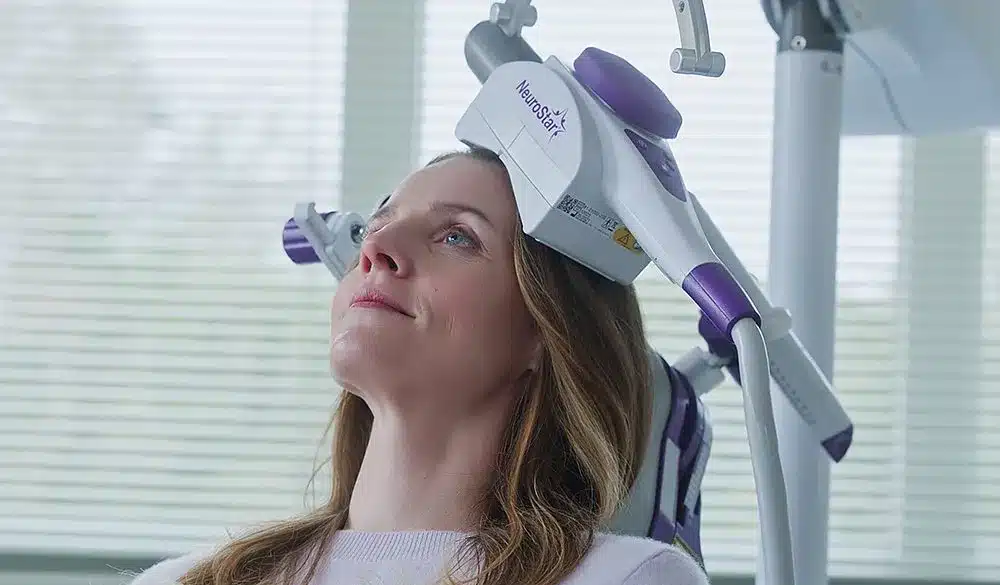
Transcranial magnetic stimulation (TMS) uses focused magnetic pulses, the same type used in an MRI, to stimulate the part of the brain that helps regulate mood. In depression, that area tends to be less active than it should be. Repeated sessions help it work the way it is supposed to again.
It is non-invasive. Nothing goes into the bloodstream, there are no needles, and there is no anesthesia. During a session your teen will hear a tapping sound and feel a tapping on the scalp. They can talk, listen to music, or just rest.
For a full overview of how TMS works and why we chose NeuroStar, see our NeuroStar TMS therapy page.
Is TMS a good fit for your teen?
For adolescents ages 15 to 21, TMS is a first-line option for depression. That means your teen does not have to work through a long list of medications before it is on the table. It may be worth a conversation if any of these sound familiar:
- Your teen or young adult, age 15 to 21, has been diagnosed with depression, or you think they may be depressed
- An antidepressant has not helped enough, or the dose keeps going up
- Side effects like weight gain, tiredness, or feeling flat have been hard to live with
- You would like an option that does not add another medication
- Your family is tired of driving to the Salt Lake Valley for care
TMS is not right for everyone. People with metal implants in or near the head, or certain seizure histories, may not qualify. That is why every patient starts with a full psychiatric evaluation. Many teens keep taking their current medication during a course of TMS, and we will talk through that with you.

What a course of TMS looks like
The first visit is the longest. We find the exact spot and strength that fits your teen, so treatment is set up for them and not for an average patient.
After that, each visit takes about 45 minutes. A full course is usually five days a week for about six weeks. Because we are right here in Tooele, sessions can fit around school, practice, or a part-time job instead of a long drive to the valley.
The most common side effect is mild scalp discomfort or a headache in the first week, which usually fades as treatment goes on. There are no memory problems, and your teen can drive (if they drive) right after. Read more about what a course of TMS looks like.
How we work with parents
For patients under 18, a parent or guardian is part of the evaluation and the treatment plan. We will explain what TMS can and cannot do, answer your questions honestly, and make sure your teen understands what to expect too.
Brittany Bullock, PMHNP, leads every evaluation. If TMS is not the best fit, she will tell you, and talk through other options such as medication management. You can also learn more about depression treatment at Oquirrh Mountain Psychiatry, or compare ketamine and TMS.
Questions parents ask
What ages can get TMS for depression?
NeuroStar TMS is FDA approved for depression in adolescents and young adults ages 15 to 21, as well as adults.
Does TMS hurt?
Most people describe a tapping feeling on the scalp. It can feel uncomfortable at first, and that usually eases within the first week. No sedation is needed.
Will my teen miss school?
Usually very little. Each visit takes about 45 minutes, there is no recovery time, and our Main Street office is close to home for most families in Tooele County.
Can my teen keep taking their medication?
In many cases, yes. We will review your teen's current medications at the evaluation and decide together.
Is TMS covered by insurance?
Coverage depends on your plan. We will check your benefits with you before treatment begins. See the insurance plans we accept.
Start with an evaluation
Oquirrh Mountain Psychiatry is at 40A S Main St in Tooele. Book an evaluation online or call (435) 260-5158, and we will walk you through whether TMS makes sense for your teen.
If you or your teen are in crisis, call or text 988 any time.