TMS Therapy in Utah, Coming Soon to Tooele
For years, anyone in Tooele County who wanted transcranial magnetic stimulation had one option, and that option was the freeway. Five days a week, six weeks straight, out to Salt Lake County and back. That is a long ask for someone whose depression already makes getting out of bed feel like a full day of work.
That is about to change. Oquirrh Mountain Psychiatry is bringing NeuroStar Advanced Therapy to our office on Main Street, which will make us the first and only clinic in Tooele offering TMS therapy close to home. If you have been waiting for real depression treatment that does not mean another prescription and another hour on I-80, this page is for you.
What Transcranial Magnetic Stimulation Actually Is
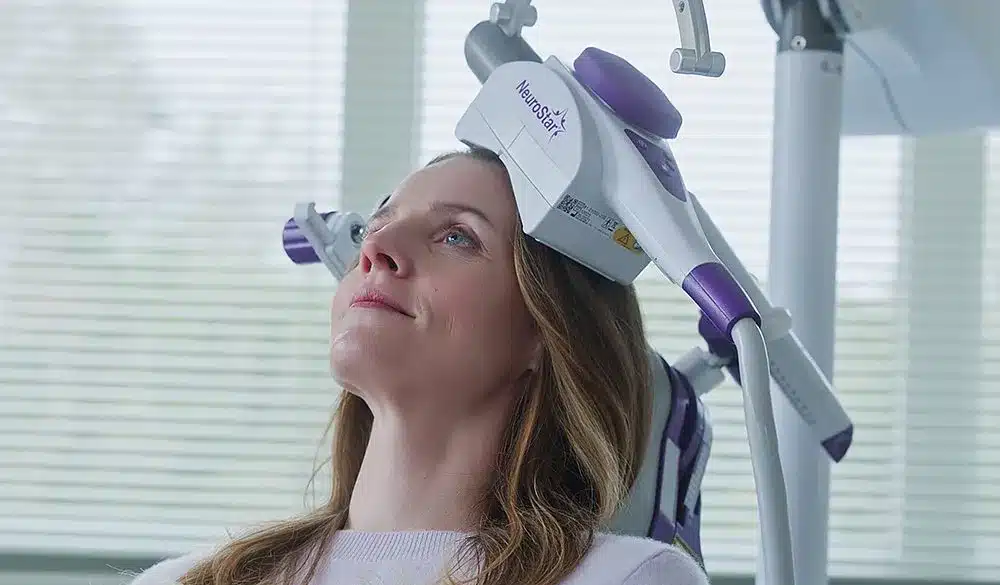
Transcranial magnetic stimulation (TMS) is a non-invasive treatment that uses focused magnetic pulses to stimulate the specific brain circuits tied to mood. No sedation. No anesthesia. No incisions and nothing entering the bloodstream. You sit in a chair, awake, in your own clothes, and you drive yourself home afterward.
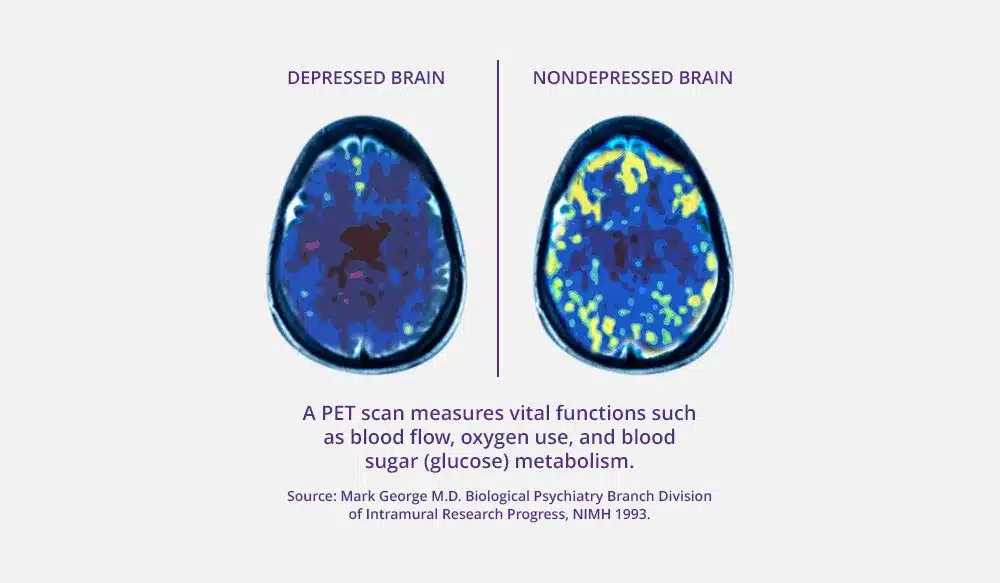
The magnetic pulses used in transcranial magnetic stimulation are the same type and strength as those produced by an MRI machine, which most patients have already experienced without a second thought. The difference is aim. An MRI images the whole head. TMS therapy directs that magnetic stimulation at the dorsolateral prefrontal cortex, an area that tends to be underactive in people living with major depressive disorder.
Mayo Clinic describes the effect plainly, noting that the stimulation appears to change how the brain is working and seems to ease depression symptoms and improve mood. Decades of research have moved transcranial magnetic stimulation from an experimental idea into everyday psychiatric practice, and brain stimulation of this kind has been in clinical use for depression in the United States since 2008.
How Does TMS Therapy Work
During a TMS session, a technician positions a small TMS coil against your scalp, just above and forward of your left temple. That coil delivers brief, repeated magnetic pulses, which is why the clinical name for this approach is repetitive transcranial magnetic stimulation, often shortened to repetitive TMS or rTMS.
Each pulse creates a small electrical current in the brain tissue directly beneath the coil, and that current prompts nerve cells to fire. Repeated across a full course of treatment, this brain stimulation appears to strengthen communication between the mood-regulating regions that have gone quiet in a depressive disorder. Think of it less as a switch being flipped and more as a circuit being retrained through repetition, the same way physical therapy rebuilds a weak muscle over weeks rather than minutes.
So does TMS work if you have already tried other things? For many people, yes. Transcranial magnetic stimulation is most often used when antidepressant medication has not produced enough relief, which is exactly the group it was studied in and cleared for.
Why We Chose NeuroStar Advanced Therapy
There are several TMS systems on the market, and we did not pick ours casually. NeuroStar TMS is the most researched system of its kind, with more patients treated on it than any other TMS platform in the world.
The TMS FDA clearance history behind NeuroStar covers major depressive disorder in adults, major depressive disorder with anxious depression, obsessive compulsive disorder as an add-on treatment, and depression in adolescents ages 15 to 21 as a first-line add-on. That last clearance matters a great deal in a county like ours, where families with struggling teenagers have very few local options.
According to outcomes data published by NeuroStar from its patient registry, 83 percent of patients who completed a full course of treatment experienced measurable relief from depression symptoms, and 62 percent experienced full remission. We share that number because it comes from a real registry of real patients rather than a marketing estimate, and because it is honest to say that results vary from person to person. Brittany Bullock will tell you the same thing in your consultation.
Who TMS Treatment Is For
TMS treatment is designed for people with a diagnosed mental health condition who have not found enough relief through the usual first steps. You may be a strong candidate if you are living with any of the following.
- Major depressive disorder that has not responded to two or more psychiatric medications, often called treatment resistant depression
- Depression paired with significant anxiety, sometimes described as anxious depression
- OCD that persists despite therapy and medication
- Depression in an adolescent age 15 or older who is already taking an antidepressant
- Persistent depression in someone who cannot tolerate the side effects that come with daily antidepressants
Researchers continue to study brain stimulation for other conditions, including post traumatic stress disorder, bipolar depression, and chronic pain. Some of that work is promising, and some of it is early. We will always tell you which category your situation falls into rather than overselling what the evidence supports.
TMS treatments are not appropriate for everyone. People with non-removable metal implants in or near the head, certain seizure histories, or specific neurological conditions may not qualify, which is why every patient starts with a full psychiatric evaluation rather than a sales pitch.
What a Treatment Session Looks Like
Your first appointment is longer than the rest. We map your motor threshold, meaning we find the precise coil placement and pulse strength that fits your individual brain and skull. That mapping is what makes this a personalized treatment rather than a one-size protocol.
After that, a standard NeuroStar treatment session can run as little as 19 minutes. You come in, sit back, and hear a rhythmic tapping while the device works. You can talk, listen to music, or watch something. When the timer stops, you leave and go back to your day, your job, or your kids. There is no recovery period and no driving restriction.
A full course is typically 36 sessions over roughly six weeks, five days a week. That daily rhythm is a real commitment, and it is precisely why having TMS therapy in Tooele instead of forty miles away changes who can realistically finish a full course of TMS treatment.
TMS Compared With Other Depression Care
Antidepressant medication travels through your entire body to reach the brain, which is why it can bring weight gain, sexual side effects, fatigue, or emotional flatness along with it. Because transcranial magnetic stimulation is applied directly to a targeted region of the brain, it carries none of those systemic side effects. Nothing circulates. Nothing needs to be tapered.
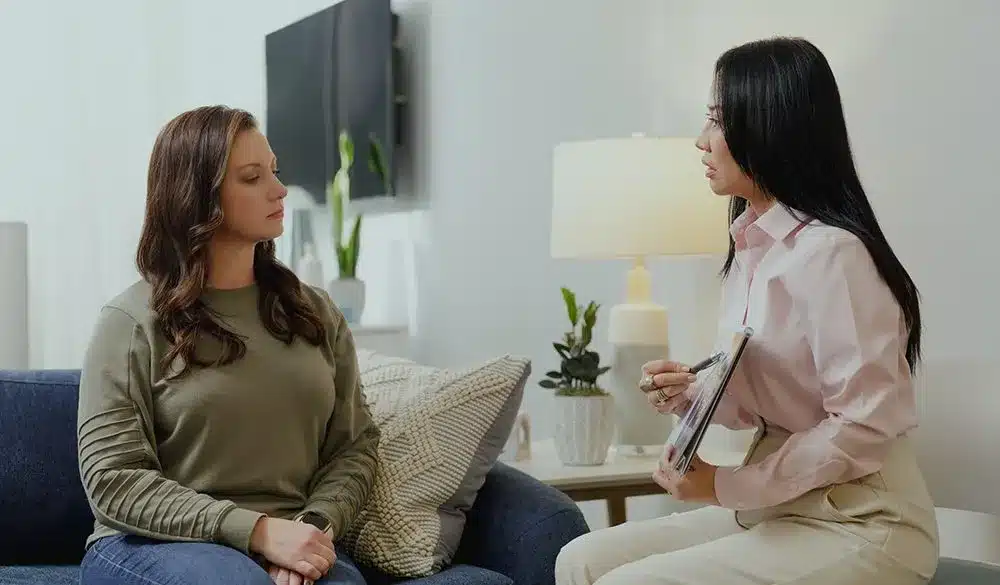
Talk therapy remains one of the most valuable tools in mental health care, and TMS is not a replacement for it. Most of our patients continue therapy and often continue medication during a course of TMS. These approaches work well together, and combining them frequently produces better outcomes than any single traditional treatment used alone.
Electroconvulsive therapy is sometimes confused with TMS, and the two are very different. Electroconvulsive therapy requires general anesthesia, deliberately induces a seizure, and often causes memory loss. Repetitive transcranial magnetic stimulation does neither. You stay awake and alert throughout, and you keep your memories and your afternoon.
Side Effects and Safety
The most common side effect is mild scalp discomfort or a tapping sensation at the treatment site, usually during the first week while your brain and scalp adjust. Some patients report a mild headache that responds to over-the-counter pain relief. Both typically fade as treatment continues.
Seizure is a known but rare risk, occurring in fewer than 0.1 percent of patients treated. TMS does not cause the memory problems associated with ECT, does not require anesthesia, and does not carry the systemic burden of daily medication. For most people, a little tapping sensitivity in week one is the entire list.
Other TMS Terms You May Run Into
If you have been researching this online, you have probably run into deep TMS and accelerated TMS, and the vocabulary can get confusing fast.
Deep TMS refers to a different coil design that reaches broader and deeper brain regions, and it is a separate device from the one we use. Accelerated TMS compresses many sessions into a handful of days rather than spreading them across six weeks, and it is still limited to a small number of specialized centers. Both are being examined in ongoing clinical trials, and both are legitimate areas of research.
Oquirrh Mountain Psychiatry will offer standard NeuroStar repetitive transcranial magnetic stimulation, the protocol with the deepest clinical trial record and the broadest insurance coverage behind it. When you are dealing with mental illness that has already resisted several attempts at relief, the version with the most evidence behind it is the right place to start.
Why This Matters for Tooele County
Tooele has grown quickly, and mental health services have not kept pace with the population. Families here routinely drive to the Salt Lake Valley for care that should be available on this side of the mountain. For a treatment that requires showing up five days a week for six weeks, that drive is not an inconvenience. It is the reason many people never start, or quit halfway through.
Bringing TMS therapy in Utah's Tooele Valley means a parent can fit a session between school drop-off and work. It means a teenager can go after class. It means treatment for depression and other mental health issues stops being something that happens somewhere else.
Join the TMS Waitlist
NeuroStar TMS is coming soon to Oquirrh Mountain Psychiatry at 40A S Main St in Tooele. We are building our list of interested patients now, and everyone on that list gets first access to consultations and scheduling when the program opens.
Call (435) 260-5158 or send us a message to be added. Whether you are a current patient of ours or you are simply tired of driving to the valley for care, we will walk you through candidacy, insurance, and timing without pressure.
Frequently Asked Questions
How long does TMS therapy take to work
Many patients notice changes in sleep, energy, or mood somewhere between weeks two and four, though some improve earlier and some later in the course. The full benefit is usually assessed at the end of all 36 sessions.
Is TMS covered by insurance
Most major insurance plans cover TMS for major depressive disorder when a patient has tried and failed an adequate trial of antidepressants. Coverage rules vary, and we handle the prior authorization paperwork for you.
Does TMS hurt
No. Most patients describe a tapping or knocking sensation on the scalp. Mild scalp discomfort in the first few sessions is common and usually settles as you get used to it.
Can I keep taking my medication during treatment
Yes. TMS is frequently used alongside existing psychiatric medications and talk therapy, and most patients continue both. Brittany will coordinate everything as one plan rather than separate pieces.
Does TMS work for anxiety, mood disorders, or other conditions
NeuroStar is cleared for depression with anxious symptoms and for obsessive compulsive disorder as an add-on. Other mood disorders and conditions such as post traumatic stress disorder are still being studied, and we will be straightforward with you about what the research currently shows.
How is this different from ketamine treatment
We already offer ketamine for treatment resistant depression, and the two work through entirely different mechanisms. Some patients are better suited to one than the other, and your evaluation will sort out which is the more effective treatment for your situation.